Fall prevention for the elderly: What strategies and tools are available to help reduce falls?
As people age, mobility and balance can become compromised. Reduced physical activity, medical conditions and age-related physiological changes can affect mobility and increase the risk of falls, with consequential effects on health, independence and confidence. This blog provides evidence-based strategies for supporting older people to stay on their feet!
Summary
Falls and mobility challenges in older adults can be influenced by medical conditions, medications, foot and balance issues, as well as environmental and social factors.
Staying active with strength and balance exercises can help reduce fall risk, provide social opportunities, and help older people improve overall health and wellbeing.
A personalised approach works best - with the right support at home, in the community, and from health services, older adults can stay mobile, safe, and connected.
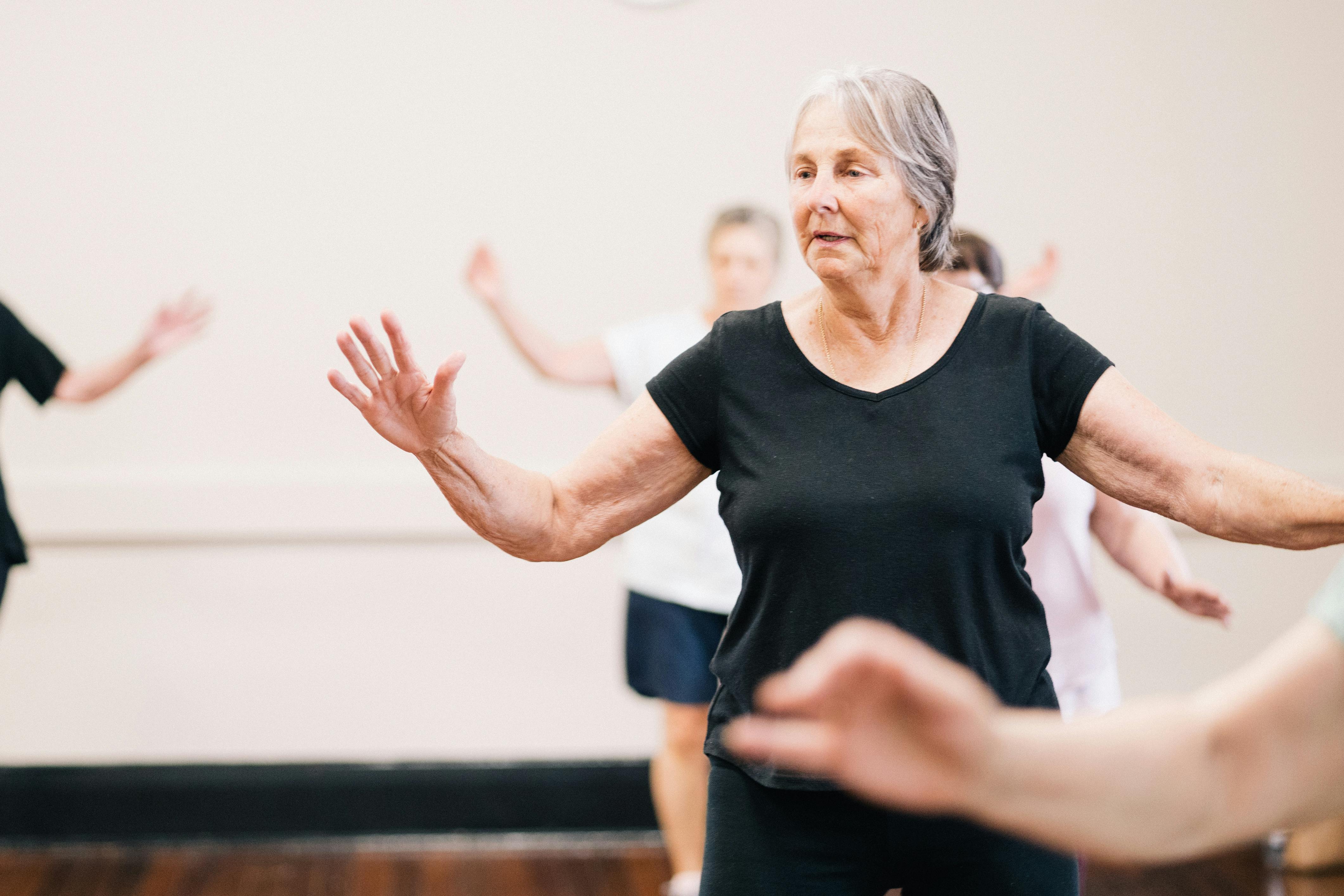
Multiple factors influence mobility, balance and risk of falls
Mobility and fall risk in older adults can be influenced by a wide range of medical, structural, sensory, and cognitive factors. Social, cultural and environmental factors are also important. Recognising these factors is essential to identifying appropriate fall prevention and mobility support strategies for seniors.
Contributing factors may include:
Medical conditions: arthritis, diabetes, Parkinson’s disease, other chronic conditions that cause weakness or frailty, postural hypotension, obesity, and dementia.
Medications: some medications may impact fall risk by causing side effects such as dizziness, drowsiness, or low blood pressure.
Structural issues: foot issues (such as high or low arches, plantar pressure abnormalities, hyperkeratosis, fat pad atrophy, or foot deformity), gait irregularities, muscle weakness, and arthritis.
Sensory issues: neuropathy, vestibular dysfunction, dizziness, pain, and visual impairment.
Cognitive or psychological factors: dementia, depression, anxiety, or fear of falling.
Social, cultural, and environmental factors: these can all affect how motivated an older person might feel about maintaining adequate physical activity, and how readily they can access enough appropriate activities. Recognising the various factors that may impact an individual’s mobility and fall risk supports clinicians in taking a multifactorial approach to assessment and intervention, ensuring care that is both targeted and effective.
Strategies for maintaining mobility in older adults
Maintaining mobility in older adulthood is not just about staying active – it’s about preserving independence, confidence and quality of life.
According to the World Health Organization (WHO) guidelines on physical activity and sedentary behaviour (2020), regular physical activity can improve physical and cognitive function, reduce fall risk and contribute to better mental health. Physical activity also helps with the prevention and/or management of chronic conditions such as cancer, heart disease, type 2 diabetes and hypertension. Additionally, it brings older people numerous important social benefits.
While there are no formal “mobility guidelines,” physical activity guidelines offer clear, practical advice. They emphasise movement that builds strength, balance, and aerobic capacity, which are all essential for navigating daily life safely and comfortably.
The WHO Toolkit for Promoting Physical Activity in Older People provides practical, evidence-based strategies to help older adults stay mobile and engaged, no matter their starting point.
WHO recommends that throughout each week, older adults should do at least:
150–300 minutes of moderate-intensity aerobic physical activity; or
75–150 minutes of vigorous-intensity aerobic physical activity; or
an equivalent combination of both
As part of their weekly physical activity, older adults should include:
multicomponent physical activity that involves functional balance and strength training on three or more days a week to enhance functional capacity and to prevent falls
strength training for all major muscle groups at least two days per week
Tip for clinicians: Encourage gradual progression and individualisation, tailored to ability and confidence levels. Multicomponent exercise programs that include strength and balance training are recommended for older adults with gait or balance impairment.
Strategies for preventing falls in older adults
A 2021 systematic review of international fall prevention guidelines identified 15 high-quality clinical guidelines, most of which strongly recommend the following interventions for reducing falls and related injuries:
fall risk stratification
assessment tests for gait and balance and/or mobility
fracture and osteoporosis management
multifactorial interventions
medication review by a physician, nurse or pharmacist
exercise promotion
home environment modifications
vision correction
footwear correction/modifications to reduce slips, trips, and falls
referral to physiotherapy for exercises and balance retraining
management of cardiovascular risk factors for falls, eg low or high blood pressure.
Recommended interventions also include vitamin D supplementation, addressing cognitive factors, and fall prevention education. However, the strength of these recommendations were less consistent.
The authors noted that “future guidelines should consider including specific recommendations for individuals with cognitive deficits, including executive functioning and memory.”
Tip for clinicians: Strength and balance exercise programmes can reduce falls and related injuries. The Health Quality & Safety Commission in New Zealand notes that many older people reject the idea they’re at risk of falling, so it may be helpful to promote the other benefits of exercise, including general health benefits and opportunities for social interaction.
Conclusion
Preventing falls and maintaining mobility in older adults requires a multifactorial approach. Clinicians play a crucial role in identifying at-risk individuals and managing their specific risk factors, promoting regular movement, and supporting strength and balance training that enhances safety and independence.
By combining clinical insight with community-based strategies and person-centred care, it is possible to reduce fall risk, improve gait and posture, and help older adults remain active and confident in their daily lives.
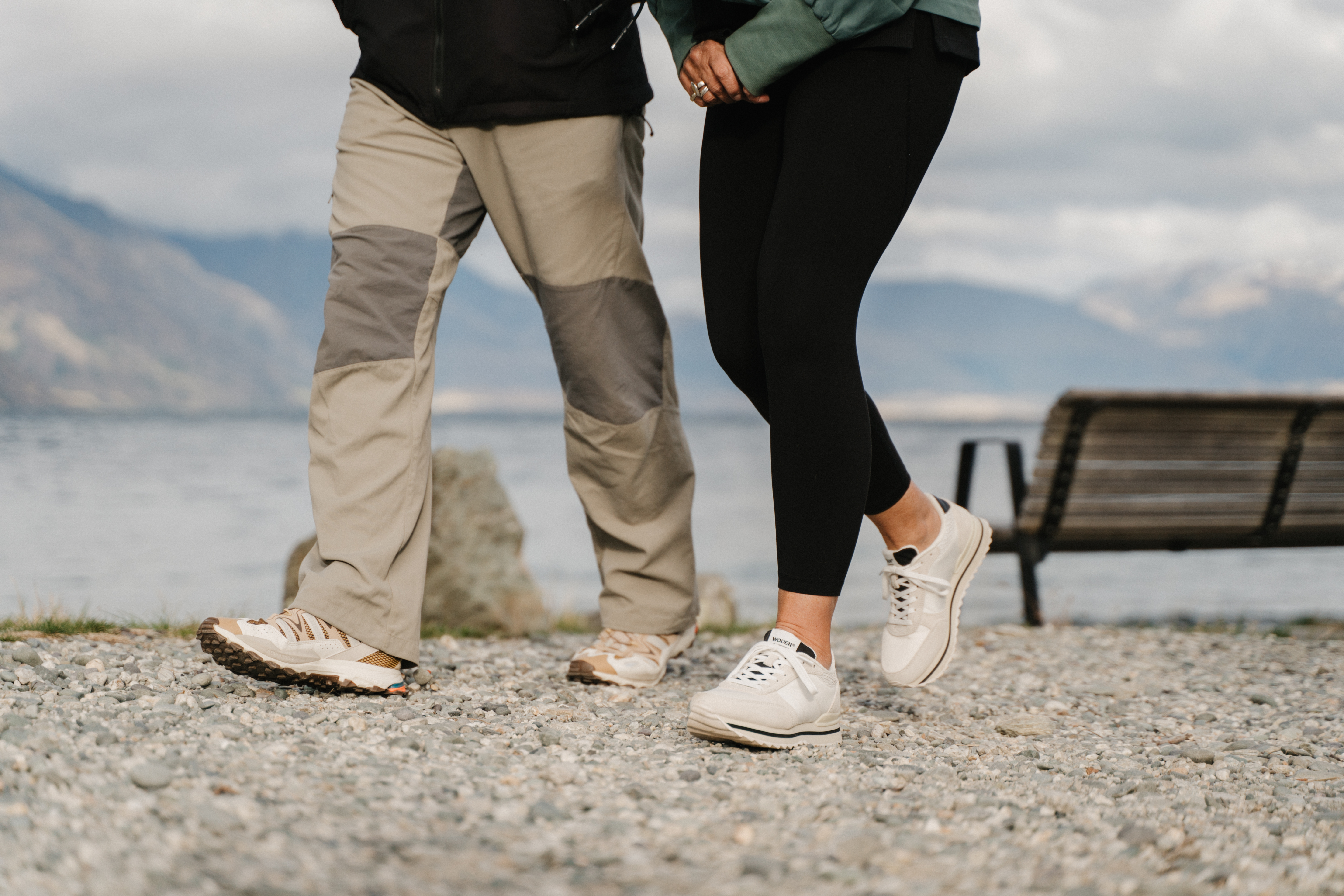
Clinical spotlight: Orthotic interventions
Orthotics are an important, non-invasive intervention that offer support, stability and comfort by altering impact forces, pressure distribution and biomechanical alignment. Orthotics can be used to help relieve pain and discomfort and support better mobility in patients with a range of pathologies of the foot and lower limb; improve posture and gait; improve balance (eg related to age or peripheral neuropathy); and prevent falls.
Formthotics - Helping people live active lives.
Formthotics are fully customisable using in-clinic heat moulding and further modification with Additions and can be used in a wide range of lower limb conditions that may be impacting mobility, balance and the risk of falls.
In a study, Formthotics were used in a multifaceted podiatry intervention that was found to reduce the rate of falls in older people with foot pain by 36% over 12 months, compared to the control group.
The authors noted that the Formthotics “may have had a direct effect on balance by improving foot stability and enhancing plantar sensory feedback, and an indirect effect by reducing plantar pressure and foot pain, both of which have been identified as risk factors for falls.”
With Formthotics, the ranges are versatile, meaning that support and cushioning can be individualised.
Dual Density Formthotics provide a firm layer of support (of various densities) with a top layer for cushioning.
Single Density Formthotics can be useful if the clinician needs to customise treatment by the addition of soft pads or a specific top layer.
Formthotics Additions is a range of customisable additions designed to help fine-tune foot posture for optimal alignment, pressure distribution and somatosensory feedback.
Formthotics are heat-moulded in the clinic within minutes and can be an affordable treatment to help support older people to remain comfortably active and maintain access to all the well-known physical, mental and psychosocial benefits of exercise.
This content is for general information only and does not replace the advice of a qualified healthcare professional, localised best practice and standards of care. Information in this material is not a substitute for clinical assessment and relevant information pertaining to specific interventions. For personal advice, consult a healthcare professional. Availability of treatments and their indications may vary by country.
References:
Maresova P, Krejcar O, Maskuriy R, et al. Challenges and opportunity in mobility among older adults - key determinant identification. BMC Geriatr. 2023;23(1):447. doi: 10.1186/s12877-023-04106-7.
World Health Organization. WHO guidelines on physical activity and sedentary behaviour. 2020. Geneva: World Health Organization. ISBN 978-9240015128. Available at: https://www.who.int/publications/i/item/9789240015128. Accessed October 2025.
World Health Organization. Toolkit for Promoting Physical Activity in Older People. 2023. Geneva: World Health Organization. Available at: https://www.who.int/publications/i/item/9789240076648. Accessed October 2025.
Health Quality & Safety Commission New Zealand. Topic 9: Improving strength and balance to prevent falls. 2022. New Zealand Government. Available at: https://www.hqsc.govt.nz/assets/Our-work/System-safety/Reducing-harm/Falls/Projects/Topics-1-10-reupload/Topic-NINE-June-2020.pdf. Accessed October 2025.
Montero-Odasso MM, Kamkar N, Pieruccini-Faria F, et al. Evaluation of clinical practice guidelines on fall prevention and management for older adults: A systematic review. JAMA Netw Open. 2021;4(12):e2138911. Available at: https://www.nice.org.uk/guidance/qs86. Accessed October 2025.
Landorf KB, Keenan AM. Efficacy of foot orthoses: What does the literature tell us? J Am Podiatr Med Assoc. 2000;90(3):149–158.
Aboutorabi A, Bahramizadeh M, Arazpour M, et al. A systematic review of the effect of foot orthoses and shoe characteristics on balance in healthy older subjects. Prosthet Orthot Int. 2016;40(2):170–181.
Guskiewicz KM, Perrin DH. Effect of orthotics on postural sway following inversion ankle sprain. J Orthop Sports Phys Ther. 1996;23(5):326–331.
Hijmans JM, Geertzen JH, Dijkstra PU, et al. A systematic review of the effects of shoes and other ankle or foot appliances on balance in older people and people with peripheral nervous system disorders. Gait Posture. 2007;25(2):316–323.
Murley GS, Landorf KB, Menz HB. Do foot orthoses change lower limb muscle activity in low arched feet towards a pattern observed in normal arched feet? Clin Biomech. 2010;25(7):728–736.
Tomaro J, Burdett RG. The effects of foot orthotics on the EMG activity of selected leg muscles during gait. J Orthop Sports Phys Ther. 1993;18(4):532–536.
Del Duchetto F, Dussault-Picard C, Gagnon M, et al. Can foot orthoses benefit symptomatic runners? Mechanistic and clinical insights through a scoping review. Sports Med Open. 2024;10(1):108.
Hawke F, Burns J, Radford JA, et al. Custom-made foot orthoses for the treatment of foot pain. Cochrane Database Syst Rev. 2008;(3):CD006801.
Robb KA, Howe EE, Perry SD. The effects of foot orthoses and sensory facilitation on lower limb electromyography: A scoping review. Foot (Edinb). 2022;52:101904.
Jor A, Lau NWK, Daryabor A, et al. Effects of foot orthoses on running kinetics and kinematics: A systematic review and meta-analysis. Gait Posture. 2024;109:240–258.
Loudon JK, Dolphino MR. Use of foot orthoses and calf stretching for individuals with medial tibial stress syndrome. Foot Ankle Spec. 2010;3(1):15-20.
Gross MT, Mercer VS, Lin FC. Effects of foot orthoses on balance in older adults. J Orthop Sports Phys Ther. 2012;42(7):649–657.
Williams DS, 3rd, McClay Davis I, Baitch SP. Effect of inverted orthoses on lower-extremity mechanics in runners. Med Sci Sports Exerc. 2003;35(12):2060–2068.
Kelly LA, Girard O, Racinais S. Effect of orthoses on changes in neuromuscular control and aerobic cost of a 1-h run. Med Sci Sports Exerc. 2011;43(12):2335–2343.
Nor Azhar A, Bergin SM, Munteanu SE, et al. Footwear, orthoses, and insoles and their effects on balance in older adults: a scoping review. Gerontology. 2024;70(8):801–811.
Spink MJ, Menz HB, Fotoohabadi MR, et al. Effectiveness of a multifaceted podiatry intervention to prevent falls in community dwelling older people with disabling foot pain: Randomised controlled trial. BMJ. 2011;342:d3411.
Davis IS, Zifchock RA, Deleo AT, et al. A comparison of rearfoot motion control and comfort between custom and semicustom foot orthotic devices. J Am Podiatr Med Assoc. 2008;98(5):394–403.
Related Articles
:format(webp))
Reducing Fall Risk with Foot Orthoses
Learn how Formthotics orthoses enhance balance and confidence to help prevent falls in older...
:format(webp))
Sever’s Disease [Podiatry]
Youth heel pain, sports struggles—how one child’s mobility was saved.
Preventing Falls for the Elderly
Study links foot issues and poor footwear to falls in older adults; orthoses may help reduce risk.